Ultimate Guide to Wedding Dresses
It’s been two years since my wedding and I have to admit I still LOVE my wedding dresses. I have zero regrets. So for any brides out there looking for guidance, this one’s for you.
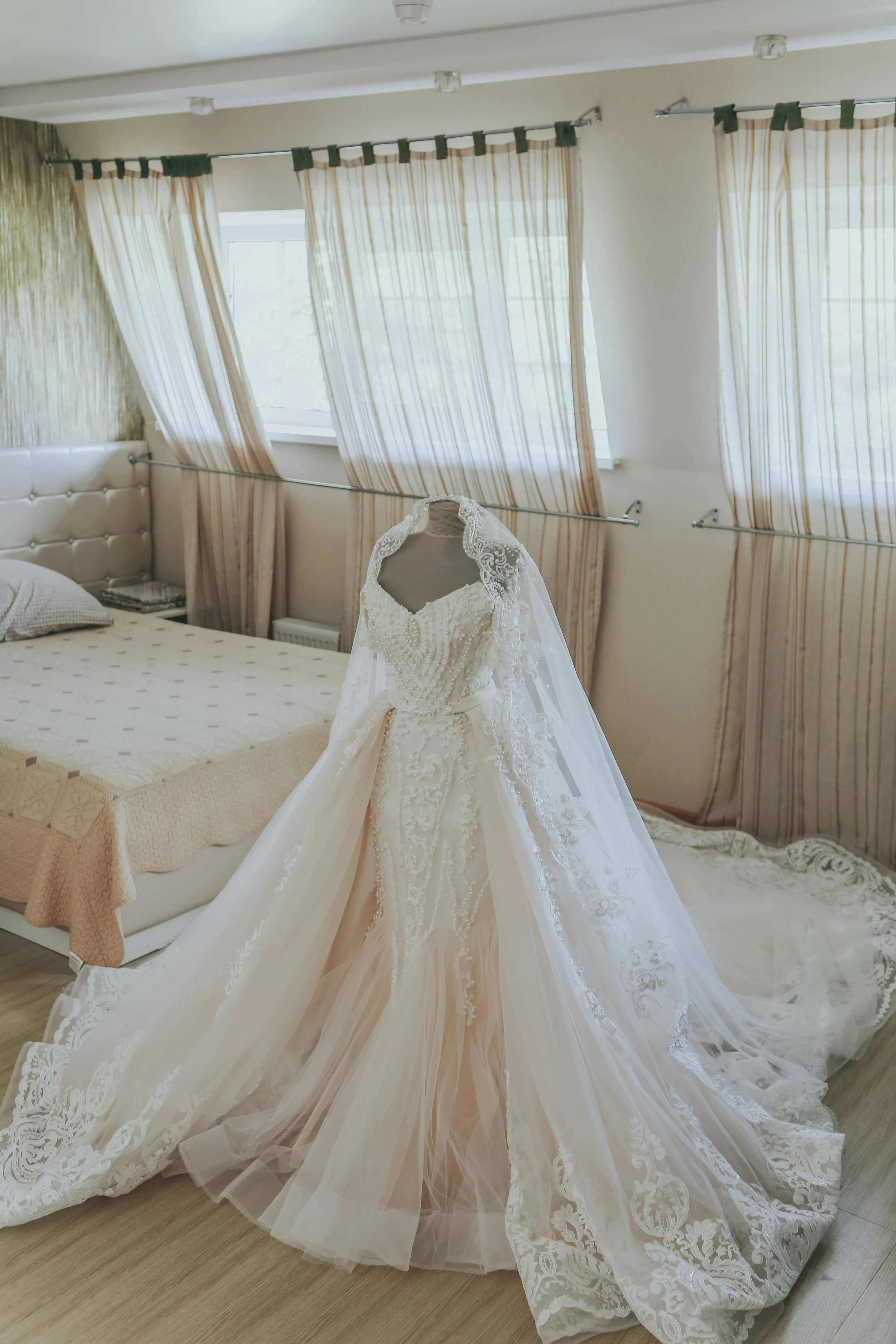
1. Clear your mind before you shop
Before you even think about silhouettes, designers or budgets, clear your head. That might even mean taking a break from family and friends. Not because you don’t want them involved, but because you want a clear foundation of what you like. They can influence you, but not to the point of you buying the wrong dress.
Having that initial foundation is what keeps you grounded when you start involving your loved ones. If you’re a chronic people pleaser like me, I highly suggest keeping your group small and only involving people who respect your taste. And if you’ve already bought your dress, don’t ask people whether they like it. Leave it, because it will play on your mind if they say no.
2. Set your budget, but spend it on what matters to you
If you’ve always had a very specific vision and you’re obsessed with gowns, push more of your budget towards the dress. If you genuinely don’t care that much about your wedding dress, that’s completely fine too. Put the money somewhere else.
Ask yourself:
- Is there a particular designer or brand I’ve always dreamed of?
- Would I rather have one luxury dress or three mid-range dresses?
- Is there something else in my wedding that matters more to me?
And remember: your budget isn’t just the price tag on the dress. Think about alterations, accessories, shoes, veil, underwear and potentially cleaning and preservation afterwards.
More importantly, don’t be disheartened if you have a small budget. There are so many affordable options if your love for dresses outgrows your budget.

Coming soon to The Bride Edit: How to Find Your Wedding Dress on a Budget.
3. Don’t sacrifice your dream dress for the sake of being “practical”
Now that you’ve worked out what you’re willing to spend, let’s talk about the emotional side of things.
If you’ve dreamt about a particular style for years (not necessarily a specific designer, but perhaps sleeves, a V-neck or a particular silhouette) and you can afford it, I genuinely think there’s something to be said for doing it.
Sometimes reality doesn’t match your dream. I wanted long sleeves and a V-neck, but I also wanted to feel cinched in, and those two styles rarely go together.
This is extra, but if you feel equally beautiful in both styles, or one is cheaper and your budget allows it, I’d say go for it and get both. My budget didn’t allow me to go boutique shopping for both, but it did allow me to get one from Etsy, and I would do it all over again.
4. Decide what you want the dress to do
Don’t just think about the dress as a silhouette. Ask:
“How do I want this dress to make me feel?”
You might have a better idea than I did. Back then, I just wanted to be me. I wanted to want things that “normal” me wouldn’t dare to get. But if you have a better sense of how you want to present yourself, this is the time to explore that.
Maybe you want to feel:
- Ethereal
- Romantic
- Glamorous
- Mysterious
- Regal
- Sexy
- Elegant
- Light
- Feminine
Then think about the physical things you want the dress to do. Do you want:
- A really defined waist?
- Support?
- Movement?
- A dramatic silhouette?
- Something soft and airy?
- A dress you can dance in?
Because two dresses can look almost identical in a photograph but feel completely different to wear.
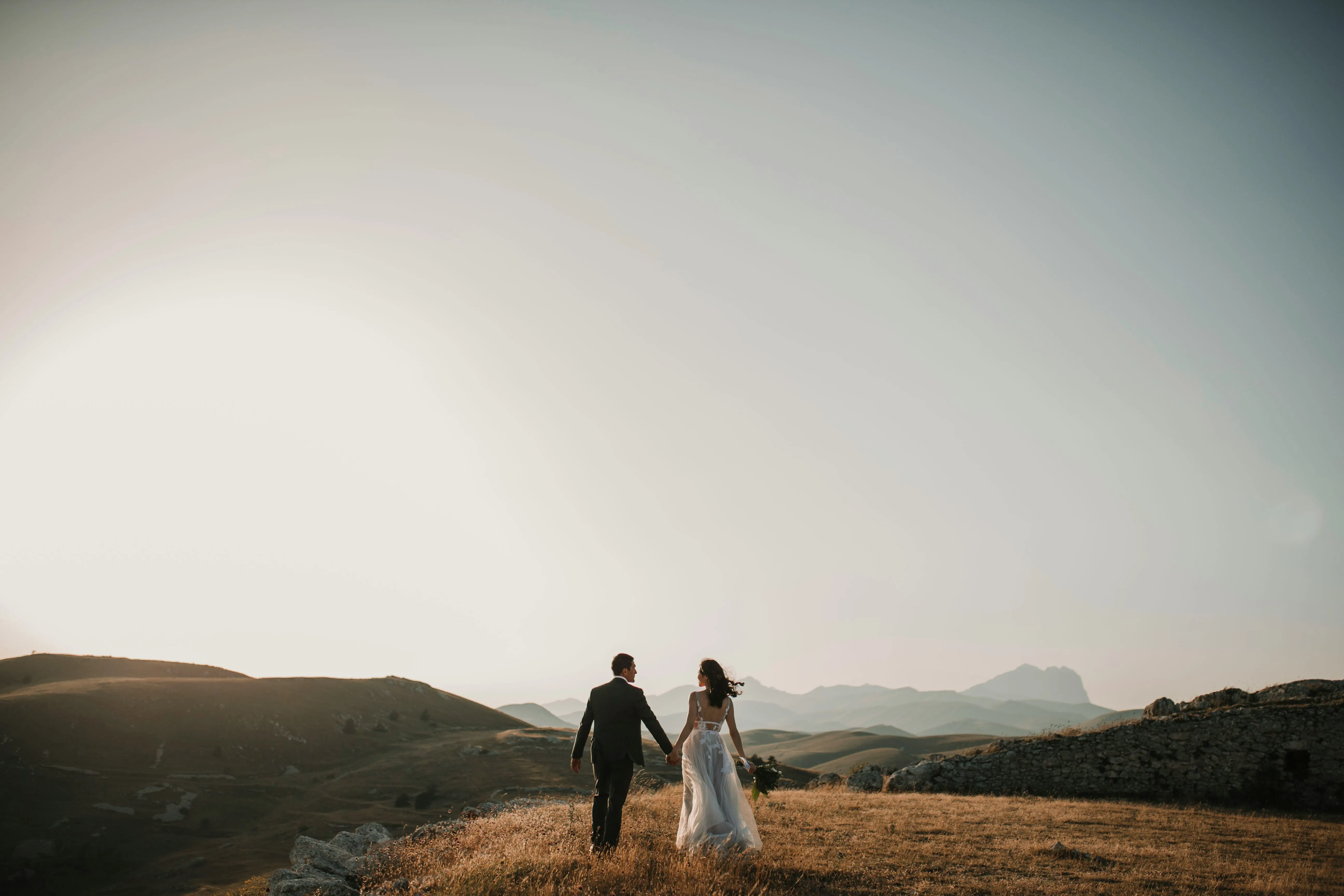
5. If you want a cinched waist, look underneath the dress
This is where I think having made dresses myself gives me a slightly different perspective.
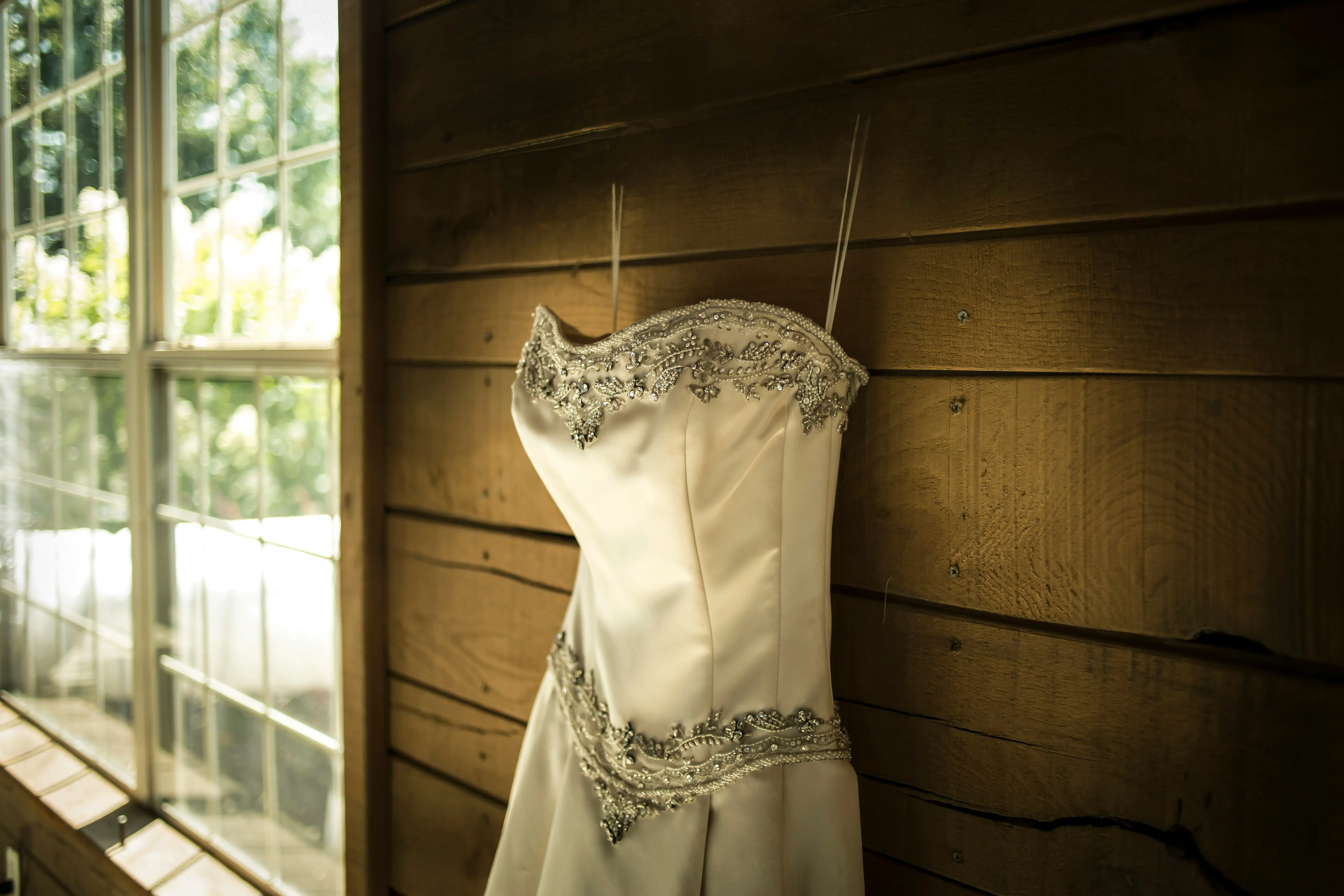
If you want a cinched waist, don’t just ask, “Does this dress look tight?” Look underneath it. Look for:
- Boning
- Internal structure
- Corsetry
- The height of the back
- How the fastening works
If you want that really secure, corseted feeling, look at how much of your back the dress actually covers. A very low back gives the fabric less surface area to wrap around your body, so you generally can’t get the same level of compression and support as you can with a higher-backed bodice.
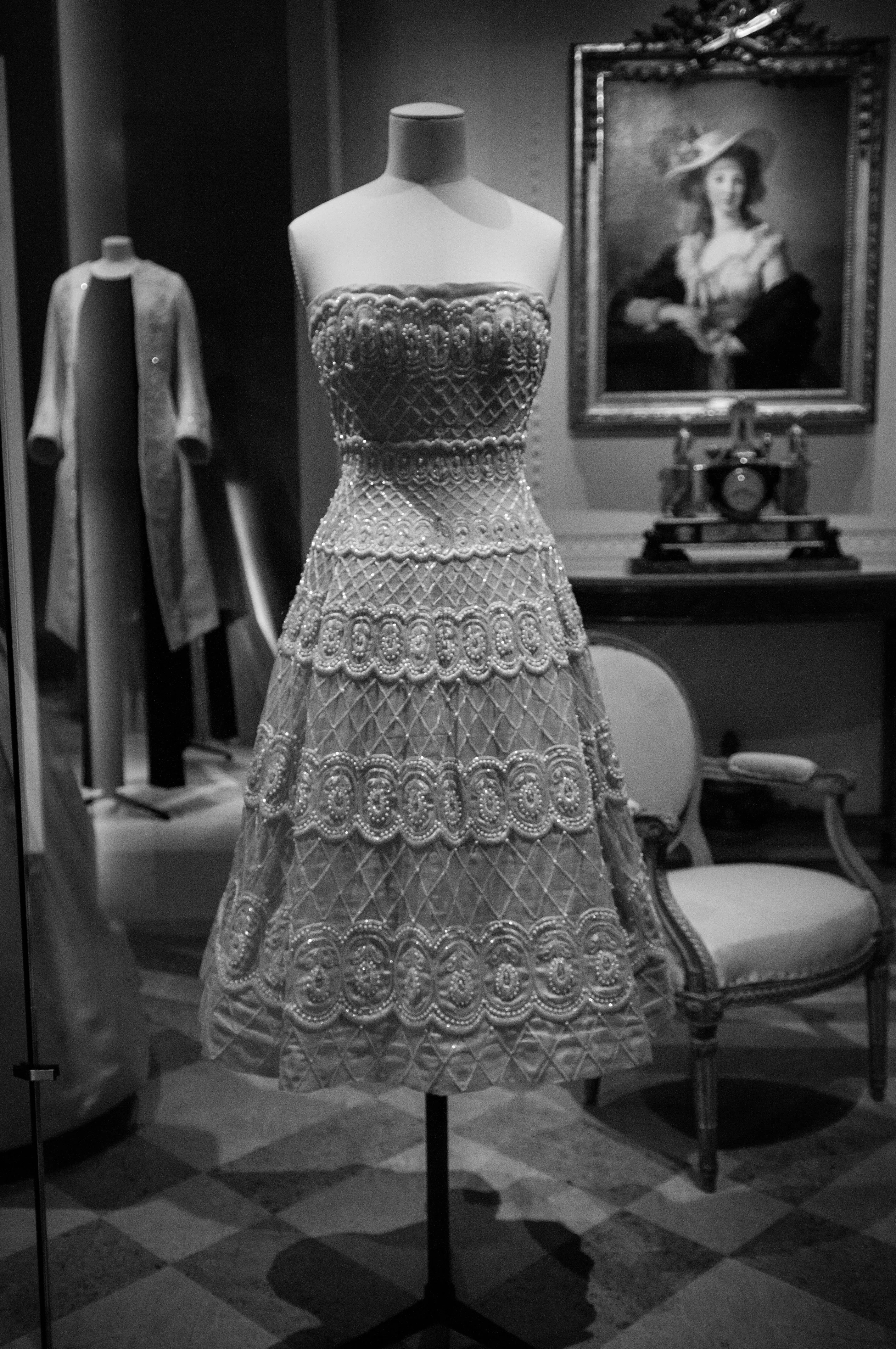
There are three types of fastening, roughly.
1. Simple zip
Usually:
- Cheaper
- No or minimal boning
- Less adjustable
- Doesn’t necessarily give you that “snatched” feeling
2. Lace-up / corset fastening
Can give you:
- Much more adjustability
- The ability to add a modesty panel
- More tolerance for small changes in your body
- More control over the fit
But a lace-up back doesn’t automatically mean a dress is highly structured. Look at what’s underneath it. If you want that really cinched look, the dress needs the internal structure to support it. Otherwise the fabric can simply pull towards the back rather than actually compressing and supporting you.
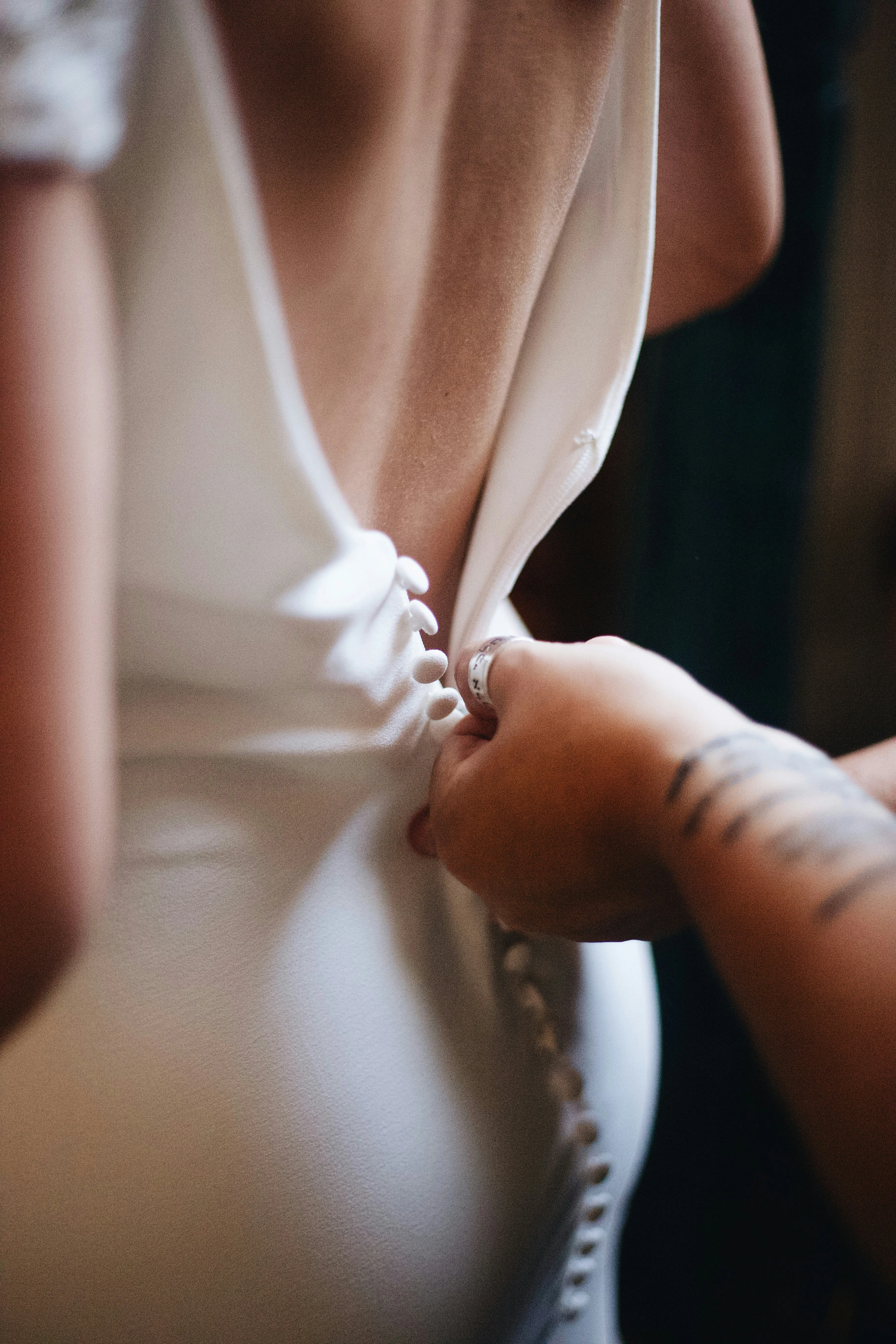
3. Hidden corset / zip with lace-up underneath
This is where things get particularly interesting. You can have the adjustability of a corset while keeping the appearance of a clean, refined zip-back dress. You still need internal boning, but when it’s properly constructed you can get that cinched look without the obvious appearance of “I’ve been cinched into a corset.” It’s a very refined bridal look.
You see this sort of construction in some luxury bridal gowns, and because it’s more complex to construct, you’re generally going to see it at the higher end of the market.
But not every dress needs boning. If you don’t want a corseted, structured feeling, don’t force yourself into one. One of my own wedding dresses was Berta-inspired, and that style wouldn’t be the same with boning. Sometimes the beauty is in the softness.
6. A dress doesn’t hide your soft parts, it moves them
Nobody wants to hear this, but I’m not hiding anything from you.
“A bodice doesn’t hide your soft parts. It moves them.”
If you have a softer tummy, don’t automatically assume that making the bodice tighter will make it disappear. Compression redistributes tissue. It doesn’t magically remove it. Unless you’re going for an A-line or ballgown, there’s a chance you’ll see it elsewhere. It shouldn’t bother you. I had that on my day.
But if you know it will bother you, opt for an elongated bodice. It can create a longer, smoother visual line because it extends past the tummy rather than ending directly at the narrowest or softest area.
Again, the construction matters more than simply making a bodice longer. The goal isn’t to hide your body. It’s to understand how the garment is interacting with your body.
7. If you’re stuck, look into draping
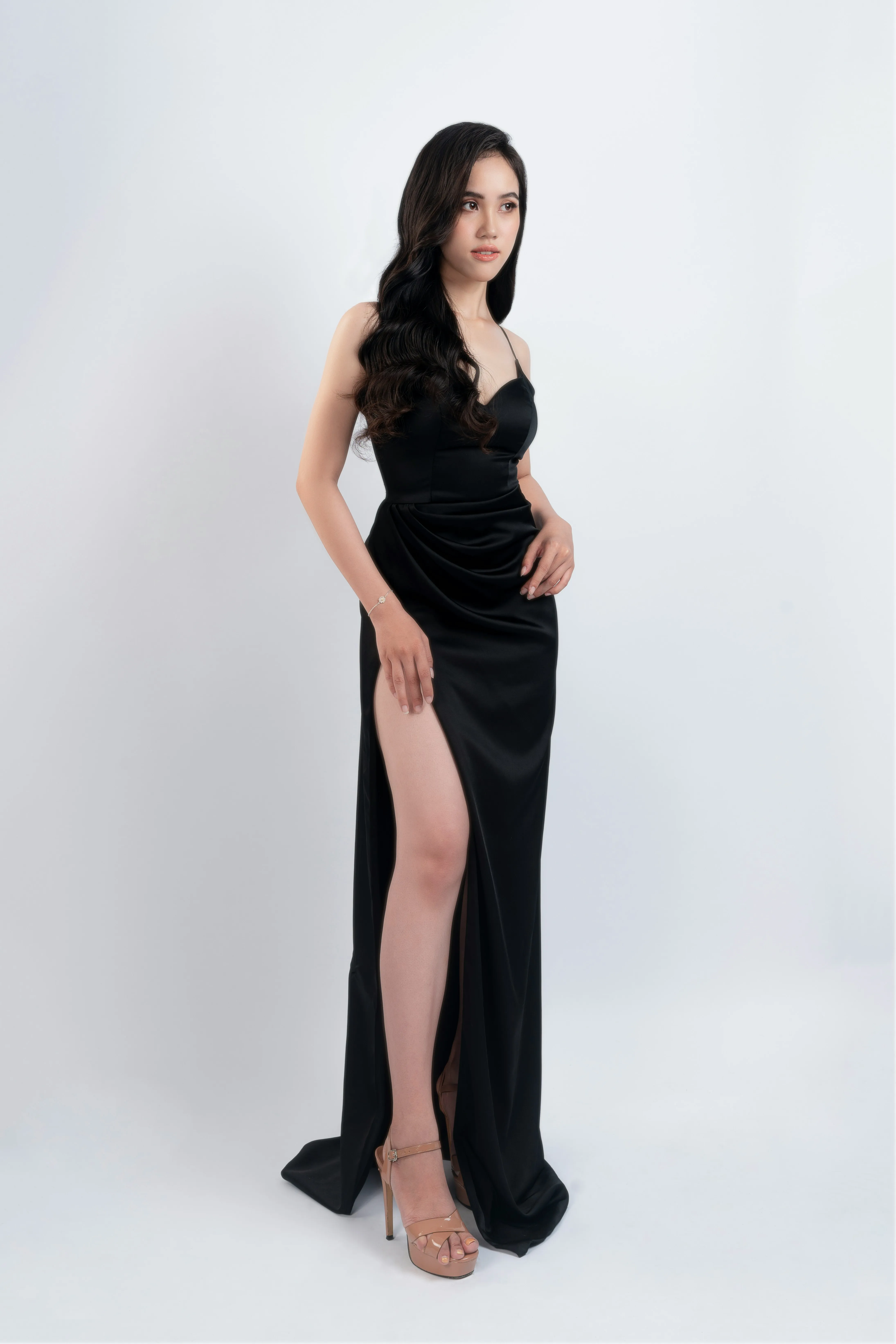
If you’re completely overwhelmed by wedding dress silhouettes, or you don’t know what suits you after trying them on, look at draping. It’s incredibly useful because it can work with the body rather than forcing the body into a very rigid shape.
Look at designers like Vivienne Westwood for examples of how draping can create incredibly flattering, sculptural shapes. It’s particularly useful if you want something that feels:
- Sophisticated
- Effortless
- Sculptural
- Romantic
- Traditional, with drama
8. It doesn’t have to be a gown with a train
This is one of the rules I really want brides to ignore if it doesn’t suit them. You don’t have to wear a floor-length wedding dress if you don’t like long dresses on you. Tea-length can be absolutely beautiful, and so can a stunning suit.
Audrey Hepburn’s wedding dress is a perfect example.
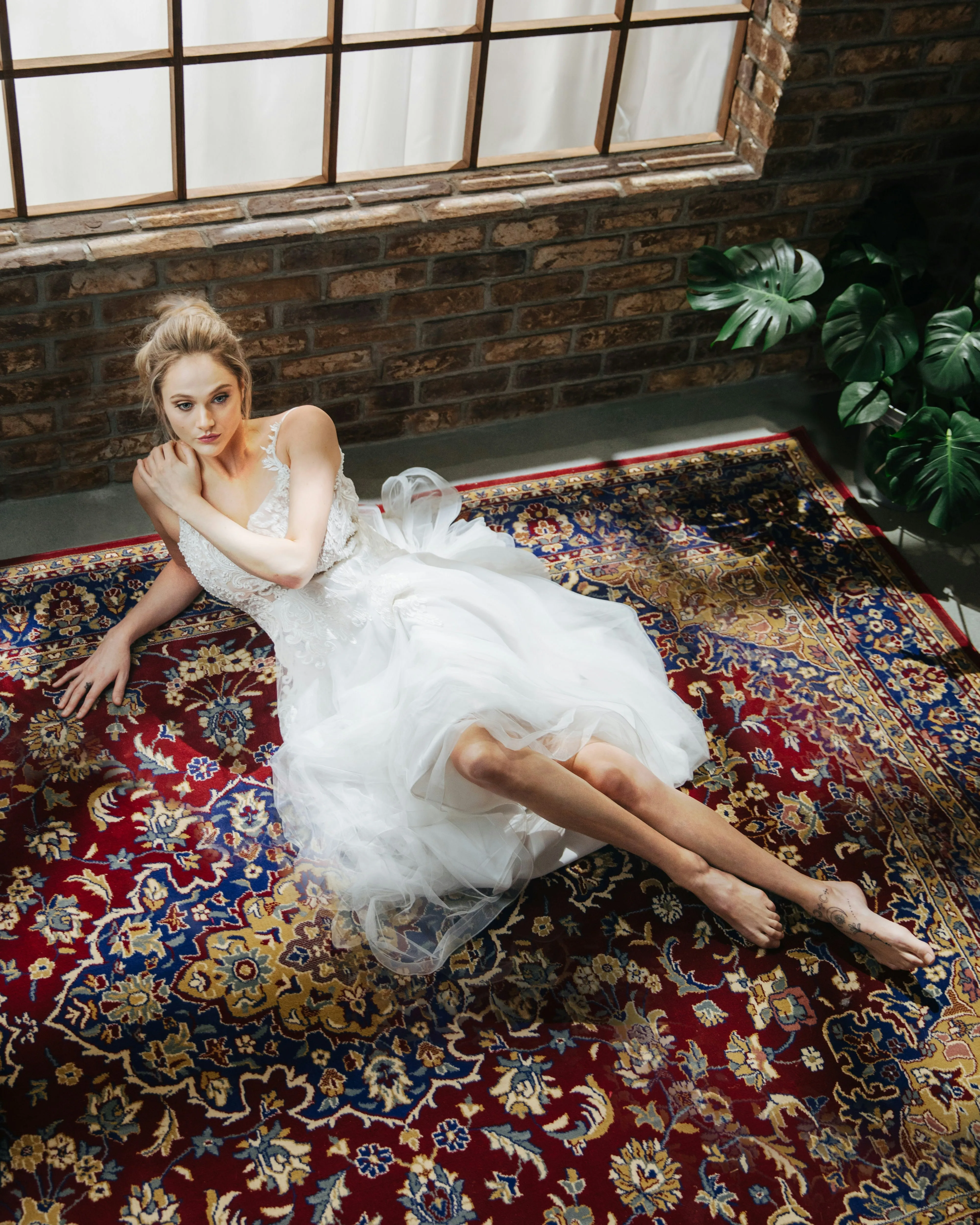
The point isn’t to wear a “wedding dress.” The point is to wear something that makes sense on you, for your wedding.
9. If comfort matters, don’t fight the fabric
If comfort is a major priority, think about what you’re actually going to be doing for the next ten hours.
The goal is to feel like you. If you want to breathe, don’t wear a corset bodice, or don’t make it tight.
If you have sensitive skin, don’t opt for heavy beading near your underarms or the sides of your dress. If you love beading, pick something less scratchy, for example:
- Pearls
- Embroidery
- Softer appliqué
- Softer tulle sleeves
These are all kinder to the skin but still give that embellished feel. And if you’re not fussed about embellishment, you can choose a relatively simple fabric and make the quality of that fabric the luxury.
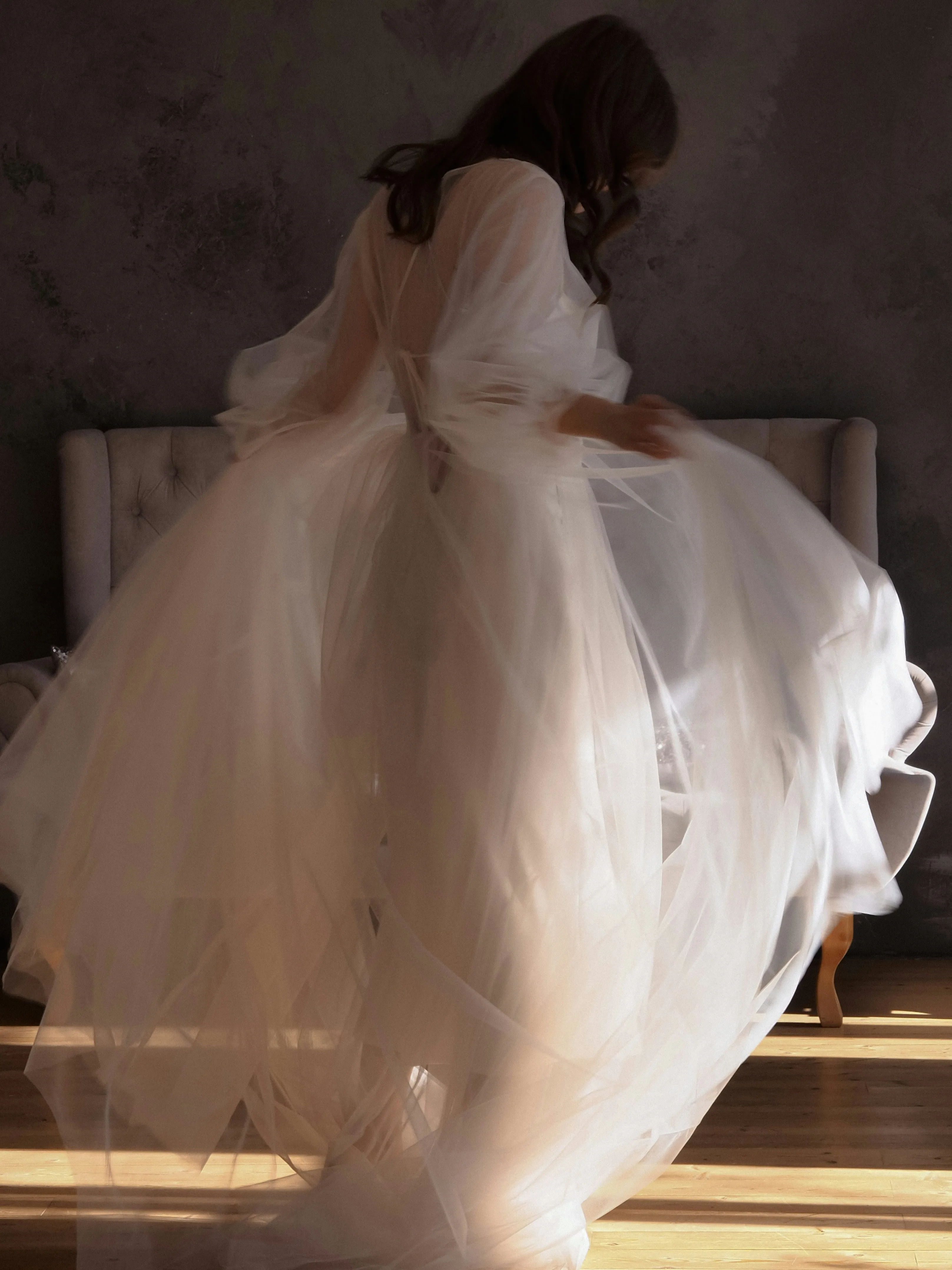
10. Think about the woman you want to be after the wedding
This isn’t as crucial, because I still think how you feel on the day is the most important thing. But if you want to get some use out of your wedding dress, some styles lend themselves to a shorter version while others don’t.
If you’re like me and would never touch or adjust your wedding dress, there’s still something in it for you.
There are two main categories when it comes to a wedding dress’s afterlife: ballgown or A-line, and trumpet or mermaid.
Ballgown / A-line dresses lend themselves to tea-length, which is more wearable than floor-length.
Trumpet / mermaid dresses don’t convert to tea-length so easily. There’s less fabric, and because of the silhouette, the shape reads more like a pencil dress, which is much more corporate and formal than a fun evening out.
If that doesn’t bother you, perfect. If it does, you can convert the fabric into everyday accessories you’ll actually use, such as a laptop case or a pencil case. This works especially well if you have embellishments that are distinctly your dress, because it becomes something you see every day that reminds you of your wedding.
And if you’re like me and don’t want to cut up your wedding dress, you might be able to find the fabric on Etsy or AliExpress. I managed to find mine, and I’m planning on making a capsule wardrobe to remind me of my wedding dress.
Final thoughts
At the end of the day, it’s your dress. You want to feel the most beautiful in it. I was extremely fortunate to have no regrets about my wedding dress choices.
I hope you found this useful. Most importantly, congratulations, and I hope you find your ultimate dress or dresses.
Want more from The Bride Edit? Join the newsletter for new guides and first access to limited edition drops.